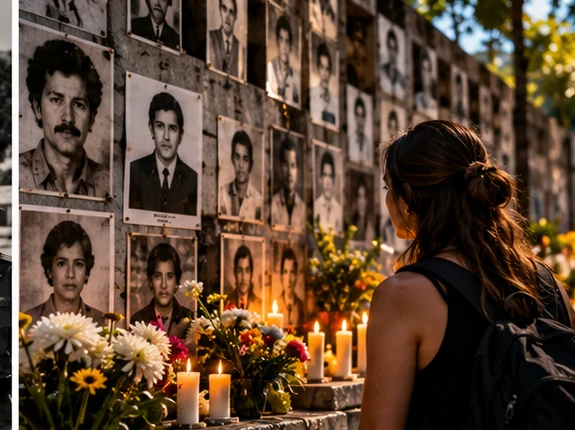
Why memory sites change the tone
A history tour that includes memorial spaces asks something different from the visitor. The goal is not to collect a notorious name or recreate a television scene. It is to understand the cost of violence and the people whose lives are often pushed to the edge of the story.
Museo Casa de la Memoria is a strong starting point
Medellín’s official tourism site describes Museo Casa de la Memoria as a space for preserving memories of armed conflict and fostering dialogue, reconciliation and human rights. That framing is useful even if you are also taking a commercial history tour.
The museum gives you a vocabulary for thinking about violence beyond the biography of a trafficker. It can make the rest of the city easier to read.
Photography is not automatically neutral
A memorial, cemetery or residential street may be technically photographable and still call for restraint. Avoid turning mourners, residents or victims’ names into props. If a guide says an area has photography rules, follow them. If you are unsure, ask.
Do not confuse attention with honor
Visiting a notorious grave or former property does not require admiration. The most responsible tours make the distinction explicit. You can be interested in the history while refusing to glamorize the people who profited from violence.
Support living communities
When a tour enters a neighborhood, remember that the neighborhood exists for its residents first. Local guides, community-run cultural spaces and ordinary businesses can help tourism contribute to the present instead of extracting only the most sensational story from the past.
Spend time in Medellín outside the narco frame. Museums, food, parks, contemporary culture and community-led tours keep one violent period from becoming your entire picture of the city.
What should I do after the tour?
If you mainly want the biography and famous sites, a Pablo-focused tour is more direct. If you want to understand the city, institutions, victims and transformation, choose a broader history route or combine the two.
Should I take a Pablo tour or a broader Medellín history tour?
No. Difficult-history tourism can be thoughtful and educational. The framing, guide, behavior of the visitor and balance of the story matter.
Is taking a narco-history tour automatically disrespectful?
Quick FAQ
- Read the actual itinerary before booking.
- Look for attention to victims, memory and present-day Medellín.
- Avoid marketing that celebrates criminal wealth or violence.
- Respect photography rules at memorials, cemeteries and neighborhoods.
- Do not treat residents as characters in a crime story.
- Pair a perpetrator-focused tour with a memory or transformation experience.
A responsible-tour checklist
If you take a guided tour, listen for the transitions between stops. The quality of the experience is often revealed there. Does the guide explain why a place matters, what changed afterward and whose perspective is missing? Or does the route simply move from notorious name to notorious name?
Do not try to turn difficult history into a scavenger hunt. Pick a small number of places that add different kinds of context. A former property can explain power. A memorial can recenter victims. A neighborhood can show how memory lives alongside ordinary daily life. A museum can slow the pace and give you language for understanding what a fast commercial tour has compressed.
How to use this guide on the ground
If you leave wanting to visit a memory museum, learn about a neighborhood from people who live there, or read more about Colombia beyond cartel mythology, the tour has probably done something useful.
That does not require a somber lecture all day. A good guide can be engaging, funny and personal while still refusing to turn trauma into fandom. The distinction is whether the humor and storytelling help you understand the city or merely make the most notorious figure more entertaining.
You should finish with more questions than a list of famous names. You should understand why certain places became symbols, who paid the cost of the violence, why memory is contested, and why Medellín’s present cannot be reduced to either a crime story or a tidy transformation slogan.
What a good history day should leave you with
Verify the details that can change
Tour logistics, operating days, access rules and inclusions can change. These sources are useful starting points for checking current information.