Curiosity is not the problem
People visit difficult-history sites all over the world. The ethical issue is how you behave and what the tour asks you to notice. You can be curious about Escobar and cartel history without celebrating violence or treating residents as an attraction.
Memorials deserve memorial behavior
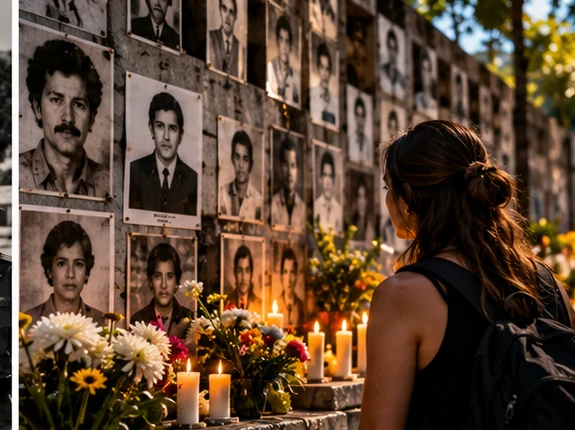
At museums, parks and cemeteries, lower your voice, follow photography rules and remember that victims’ names are not set dressing. A smiling “crime boss” pose can land very differently in a place built for remembrance.
Neighborhoods are homes
Do not photograph residents closely without permission. Do not block doorways. Do not demand that locals explain their relationship to famous criminal history. A guide can tell you what is appropriate for that particular stop.
Do not reenact violence for a picture
If a tour invites visitors to pose with imitation weapons, recreate a death scene or perform a cartel persona, ask yourself whether the joke is worth making in the place where the history happened. The most interesting photographs are often the ones that show the city as it exists now.
Spend money in the living city
Use local guides, buy from ordinary businesses, visit cultural institutions and add experiences unrelated to narco history. That does not erase the past. It keeps the trip from extracting one sensational story from Medellín and leaving.
Ask harder questions
Who is missing from the story? Who was harmed? How does this neighborhood understand the past? What changed, and what did not? Those questions make the tour better and signal to guides that travelers value more than mythology.
Spend time in Medellín outside the narco frame. Museums, food, parks, contemporary culture and community-led tours keep one violent period from becoming your entire picture of the city.
What should I do after the tour?
If you mainly want the biography and famous sites, a Pablo-focused tour is more direct. If you want to understand the city, institutions, victims and transformation, choose a broader history route or combine the two.
Should I take a Pablo tour or a broader Medellín history tour?
No. Difficult-history tourism can be thoughtful and educational. The framing, guide, behavior of the visitor and balance of the story matter.
Is taking a narco-history tour automatically disrespectful?
Quick FAQ
- Read the actual itinerary before booking.
- Look for attention to victims, memory and present-day Medellín.
- Avoid marketing that celebrates criminal wealth or violence.
- Respect photography rules at memorials, cemeteries and neighborhoods.
- Do not treat residents as characters in a crime story.
- Pair a perpetrator-focused tour with a memory or transformation experience.
A responsible-tour checklist
If you take a guided tour, listen for the transitions between stops. The quality of the experience is often revealed there. Does the guide explain why a place matters, what changed afterward and whose perspective is missing? Or does the route simply move from notorious name to notorious name?
Do not try to turn difficult history into a scavenger hunt. Pick a small number of places that add different kinds of context. A former property can explain power. A memorial can recenter victims. A neighborhood can show how memory lives alongside ordinary daily life. A museum can slow the pace and give you language for understanding what a fast commercial tour has compressed.
How to use this guide on the ground
If you leave wanting to visit a memory museum, learn about a neighborhood from people who live there, or read more about Colombia beyond cartel mythology, the tour has probably done something useful.
That does not require a somber lecture all day. A good guide can be engaging, funny and personal while still refusing to turn trauma into fandom. The distinction is whether the humor and storytelling help you understand the city or merely make the most notorious figure more entertaining.
You should finish with more questions than a list of famous names. You should understand why certain places became symbols, who paid the cost of the violence, why memory is contested, and why Medellín’s present cannot be reduced to either a crime story or a tidy transformation slogan.
What a good history day should leave you with
Verify the details that can change
Tour logistics, operating days, access rules and inclusions can change. These sources are useful starting points for checking current information.