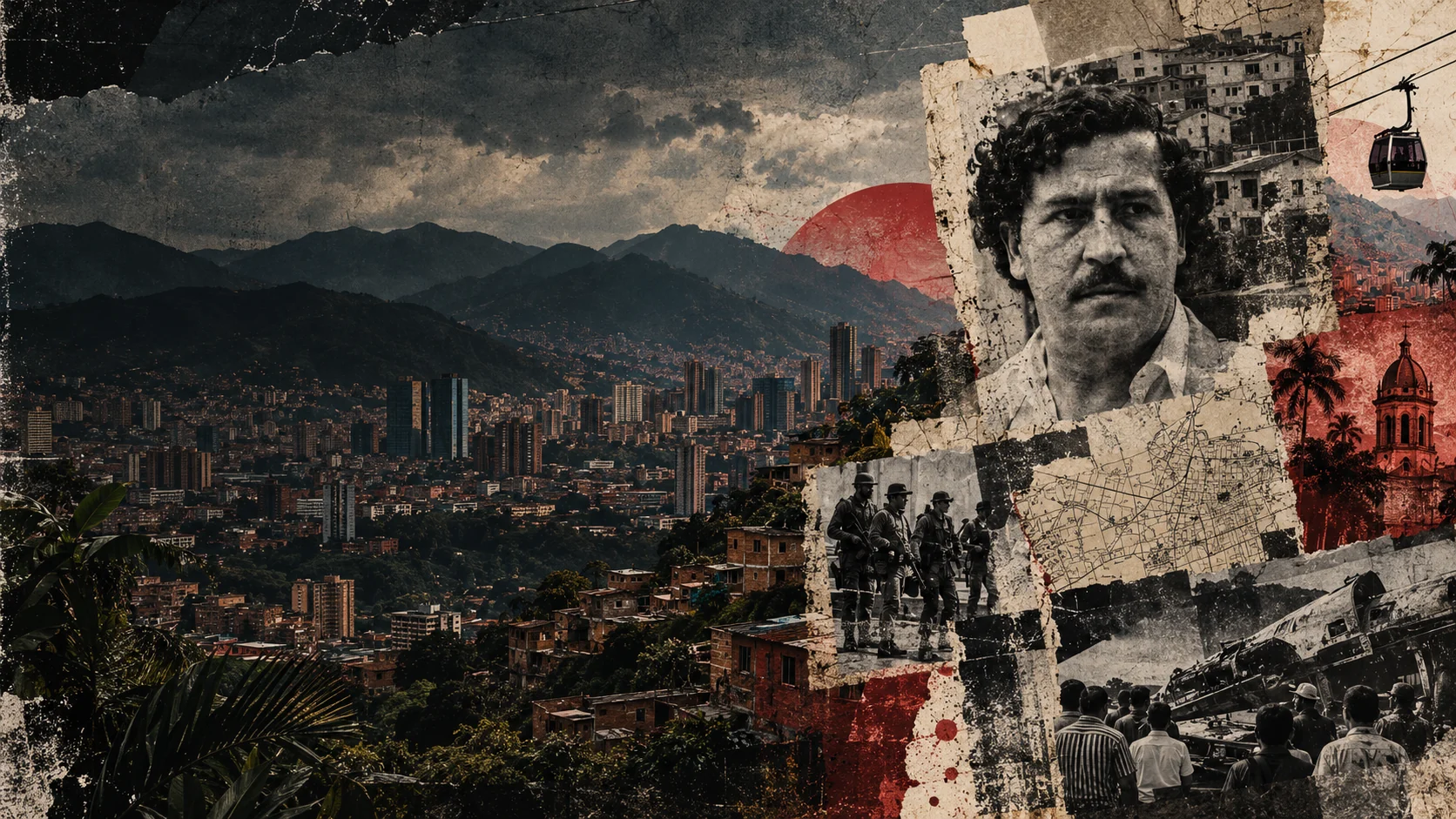
A narco-history tour and a Comuna 13 tour may appear in the same search results, but they are not interchangeable. Treating them as one story flattens Medellín into a single era and turns a living neighborhood into a prop for somebody else’s mythology.
A narco-history tour is about a citywide period
A responsible history tour should place organized crime inside a larger story: institutions, violence, victims, neighborhoods, state responses, memory and the long process of change. Pablo Escobar may be part of that history, but he is not the whole city.
Comuna 13 is a living community
Comuna 13 has its own history of violence, state operations, displacement, community organization, art, mobility and tourism. Visitors should resist the lazy assumption that every difficult chapter in Medellín can be summarized as “narco history.”
The distinction changes how you choose a guide
For Comuna 13, look for community context and respect for residents. For cartel-era history, look for a guide who discusses victims and institutions rather than building the day around gangster spectacle.
You can do both without confusing them
If both subjects interest you, schedule them as separate learning experiences or choose a guide who clearly explains why they are distinct. Medellín’s official tourism materials increasingly emphasize memory, transformation and responsible behavior toward host communities.
Compare the listing, not just the headline.
Availability, price, inclusions, meeting points and policies can change. Use the current activity page as the source of truth before paying.
Affiliate disclosure: booking links may earn us a commission at no added cost to you.